
No More War | Page 1/2
AN OPEN LETTER
FOR All The Children including The Child In You:
No More War

This webpage is a collage of online content I pulled together primarily for myself, so that I could visit or revisit them at my leisure in an attempt to gain a deeper understanding of the most pressing issues of our day, of our generation, of our species. In so doing I hope to build a degree of emotional resilience from the onslaught of images of people being slaughtered in the multitude of violent armed conflicts raging on our planet today. Violence whether in our immediate surroundings or in faraway lands hurts us all. All killing hurts us all.
Although there are less than 6000 words on this page, the content mined from the internet–YouTube in particular–may well amount to many hours of listening, reading, and reflection.I’ve interspersed the articles and podcasts with pieces of music, music videos, and poetry to give me a break from the intensity and immensity of the central issue: war.
Most if not all images are also from the internet, credited at the end of the page. These images are linked to the source of the content or to related content: articles, music, podcasts, wikipedia, online bookstores…
Ultimately this search for truth is also a silent protest against the ugliness and viciousness of war and the people who promote, incite, or participate in them, from neoliberals to neofascists and ultra-nationalists, and all those who are intent in destroying or weakening democracy. Violence hurts us all, whether we are on the firing line or not.
What AI and I have to say about the content: The content attempts to further illustrate the interconnected issues of violent conflict, militarism, consumerism, and neoliberalism to be causing much of the needless human suffering of today. They highlight the forced displacement of children and the devastating environmental, economic and emotional toll of war to all of humanity.
The trauma experienced by displaced children isn’t just individual; it’s generational. A future shaped by war, poverty, and exile perpetuates cycles of suffering and instability, fuelling resentment down the generations. Many of these children, if they survive, will grow up in societies that either marginalise them or recruit them into further cycles of violence.
Furthermore, the content examines the harmful impacts of consumerist and neoliberal policies on people, society, and the environment, drawing our attention to the commodification of nearly every aspect of life, including human relationships, which increasingly resemble commercial transactions. Prominent voices, such as George Monbiot, emphasise the urgency of recognising these connections and call for a collective movement toward fundamental systemic change. —AI&I
I

Culture of Peace : What is it? | Racism No Way: Anti-racism education for Australian schools
“As defined by the United Nations, Culture of Peace is a set of values, attitudes, modes of behaviour and ways of life (…) to solve problems through dialogue (…).”
Today’s Armed Conflicts | Geneva Academy: Academy Of International Humanitarian Law And Human Rights
“Our Rule of Law in Armed Conflict Online Portal (RULAC) classifies all situations of armed violence that amount to an armed conflict under international humanitarian law.
“Today, it monitors more than 110 armed conflicts and provides information about parties, the latest developments, and applicable international law. Some of these conflicts make the headlines, others do not. Some of them started recently, while others have lasted for more than 50 years.”
Highest number of countries engaged in conflict since World War II | Visions Of Humanity
“The global economic impact of violence in 2023 was $19.1 trillion (…). Expenditure on peacebuilding and peacekeeping totalled $49.6 billion, representing less than 0.6% of total military spending.”
Forced migration or displacement | Migration Data Portal
“Key Trends: Forced displacement due to persecution, conflict, violence, human rights violations or events seriously disturbing public order.
“The total number of people forcibly displaced – both within countries and across borders – as a result of persecution, conflict, generalized violence, human rights violations or events seriously disturbing public order almost doubled over the past decade.
“While there were 59.5million forcibly displaced people as of the end of 2014 (UNHCR, 2015), the figure was 117.3 million by the end of 2023 (UNHCR, 2024). (…)
“UNHCR operational data estimates that forced displacement had likely already exceeded 120 million by the end of April 2024. The drastic increase of total forced displacement — both within countries and across borders.”
“An estimated forty per cent of all forcibly displaced people at the end of 2023 were children.”
—Migration Data Portal
50 million*** of forcibly displaced people today are children. These traumatised and brutalised human beings—many with missing limbs and nowhere to call home—are only those who had escaped violent deaths and somehow survived the injuries inflicted by the violence of weapons wielded by men in wars waged by men.
War, dispossession, mutilation, and poverty–this sort of human suffering–is this what’s necessary to sustain the consumerist lifestyles of Western liberal economies? The direct consequences of these wars rarely reach those who benefit from them. The true human cost—the suffering of uncountable millions—is externalised, kept out of sight and out of mind, if not dehumanised.
***Australia’s population: 26 million (2022)
Gerome Villarete
12 Nov 2024, updated 18 Feb 2025
Art Saves Lives

BACK TO
HEADER
II
Since Plato at least, the arts have been under attack on the grounds that they have no useful role in society. They are under attack at present. We have convinced ourselves that the role of the middle ranks of our population is to be useful to the economy — more precisely, to the future economy, of which we know nothing for certain but can imagine it to be as unlike the present situation as the present is unlike the order that prevailed a few decades ago.
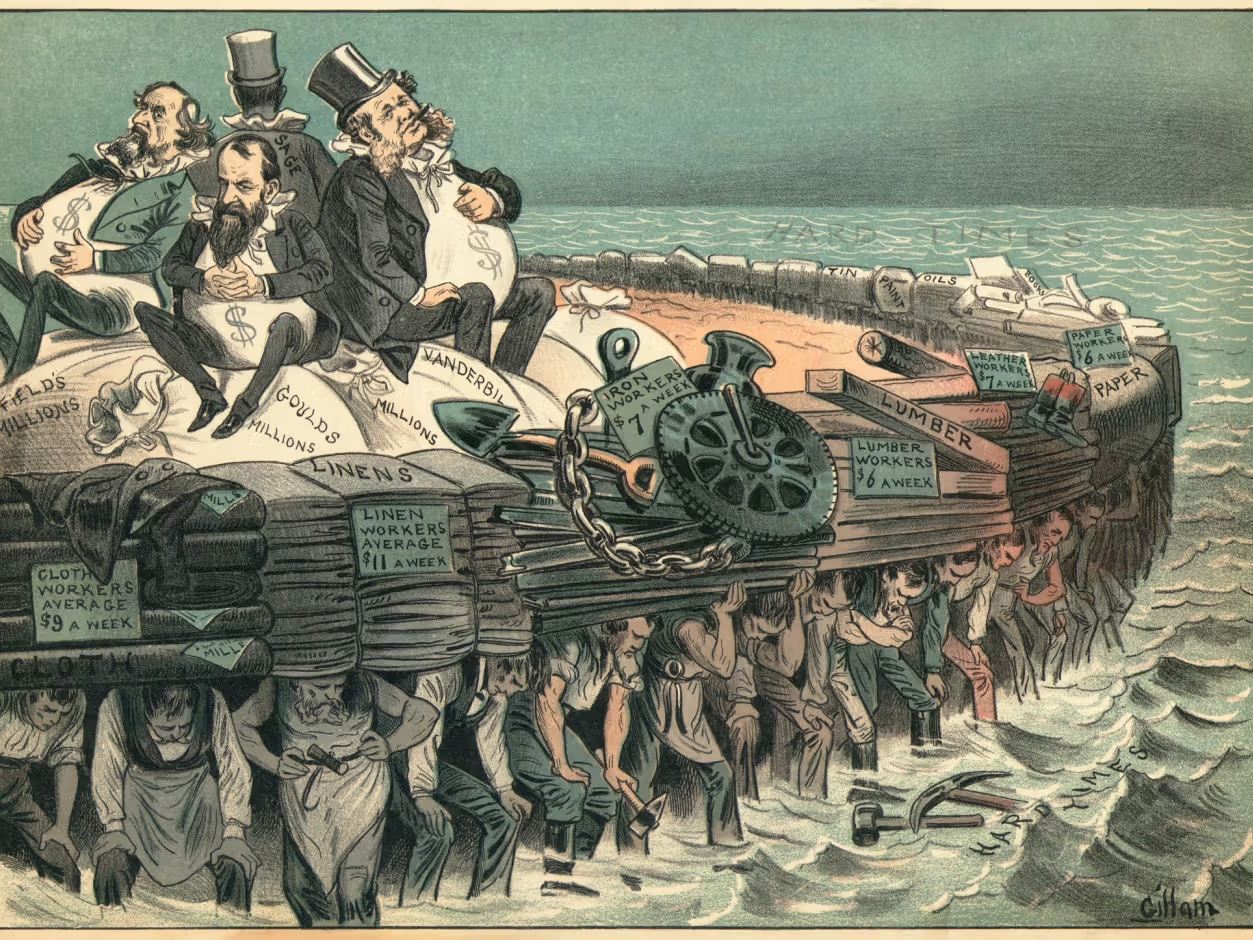
If today is any guide, we can anticipate further profound disruption. Whatever coherence the economy has created in the culture to this point cannot be assumed. The reverence paid to economic forces, as well as the accelerating accumulation of wealth in very few hands, increasingly amounts to little more than faceless people with no certain qualifications playing with money, and enforces the belief that our hopes must be surrendered to these forces.
The coherence that society might take from politics — that is, from the consciousness that it is a polity, a human community with a history, and an aspiration toward democracy, the latter of which requires a capacity for meaningful decisions on its life and direction — exists apart from these forces and is at odds with them.
So far as those forces are determining, and so long as they succeed in defining utility, value, and legitimacy for the rest of us, we will have surrendered even the thought of creating a society that can sustain any engagement or purpose beyond that endless openness and submissiveness to other people’s calculations and objectives we call competition.–Marilynne Robinson
Save Our Public Universities | Harper’s March 2016


The Invisible Doctrine by George Monbiot & Peter Hutchison | Penguin Books Publishers
“One of the most pernicious effects has been to make our various crises—from climate disasters to economic crashes, from the degradation of public services to rampant child poverty—seem unrelated. In fact, they have all been exacerbated by the “invisible doctrine,” which subordinates democracy to the power of money. Monbiot and Hutchison connect the dots—and trace a direct line from neoliberalism to fascism, which preys on people’s hopelessness and desperation.”
Neoliberalism’s Ascent (Review: The Invisible Doctrine by George Monbiot & Peter Hutchison) | The Guardian | Peter Geoghegan (29 May 2024)
“In 1945, Antony Fisher visited the neoliberal economist Friedrich Hayek at the London School of Economics. Fisher, an old Etonian who worked in the City, shared the Austrian’s belief that the nascent postwar welfare state would eventually lead to totalitarianism. Fisher wanted Hayek’s advice. Should he go into politics? No, the professor said, something like a thinktank would have far more “decisive influence in the great battle of ideas”.
“Fisher went on to found the Institute of Economic Affairs (IEA), the outfit widely credited, among other things, with incubating Liz Truss’s disastrous premiership. Fisher later moved to the US, where he set up the Atlas Network, an umbrella organisation that now covers more than 450 thinktanks, including influential groups such as the Cato Institute and the Heritage Foundation. Many are charities. Few name their donors.”–The Guardian
Neoliberalism – The Ideology At The Root Of All Our Problems | The Guardian | George Monbiot (April 2016)
Neoliberalism sees competition as the defining characteristic of human relations. It redefines citizens as consumers, whose democratic choices are best exercised by buying and selling, a process that rewards merit and punishes inefficiency. It maintains that “the market” delivers benefits that could never be achieved by planning.
“Attempts to limit competition are treated as inimical to liberty. Tax and regulation should be minimised, public services should be privatised. The organisation of labour and collective bargaining by trade unions are portrayed as market distortions that impede the formation of a natural hierarchy of winners and losers. Inequality is recast as virtuous: a reward for utility and a generator of wealth, which trickles down to enrich everyone. Efforts to create a more equal society are both counterproductive and morally corrosive. The market ensures that everyone gets what they deserve.
“We internalise and reproduce its creeds. The rich persuade themselves that they acquired their wealth through merit, ignoring the advantages – such as education, inheritance and class – that may have helped to secure it. The poor begin to blame themselves for their failures, even when they can do little to change their circumstances.
“Never mind structural unemployment: if you don’t have a job it’s because you are unenterprising. Never mind the impossible costs of housing: if your credit card is maxed out, you’re feckless and improvident. Never mind that your children no longer have a school playing field: if they get fat, it’s your fault. In a world governed by competition, those who fall behind become defined and self-defined as losers.”–George Monbiot

Why Neoliberalism Needs Neofascists | Boston Review | Prabhat Patnaik (July 2021)
It has been four decades since neoliberal globalization began to reshape the world order. During this time, its agenda has decimated labor rights, imposed rigid limits on fiscal deficits, given massive tax breaks and bailouts to big capital, sacrificed local production for multinational supply chains, and privatised public sector assets at throwaway prices.
“The result today is a perverse regime defined by the free movement of capital, which moves relatively effortlessly across international borders, even as free movement of the people is ruthlessly controlled by a sharp increase in income inequality and a steady winnowing of democracy. No matter who comes to power, no matter what promises are made before elections, the same economic policies are followed. Since capital, especially finance, can leave a country en masse at extremely short notice—precipitating an acute financial crisis if its “confidence” in a country is undermined—governments are loath to upset the status quo; they pursue policies favorable to finance capital and indeed demanded by it. The sovereignty of the people, in short, is replaced by the sovereignty of global finance and the domestic corporations integrated with it.
“This abridgment of democracy is usually justified by political and economic elites on the grounds that neoliberal economic policies usher in higher GDP growth—considered the summum bonum after which all policy should aim. And indeed, in many countries, especially in Asia, the neoliberal era has ushered in noticeably more rapid growth than under the earlier period of dirigisme. Such growth scarcely benefits the bulk of the people, of course: in fact, neoliberal policies are even more highly associated with the growth of income inequality than with the growth of GDP.”—Prabhat Patnaik
The 10 tactics of fascism | Jason Stanley | Big Think (October 2021)
“Although we lack an unequivocal definition of the concept “neoliberalism”, there does seem to be a certain consensus around the fact that the crisis of 2007-2008 — and perhaps that of the pandemic — has led to the development of a new historical stage in the trajectory of neoliberalism. Looked at more closely, this new historical stage is characterized by the multiple and overlapped crises that became visible after the breakdown of (what its supporters considered) the utopian moment of neoliberal governance. These crises include ecological crisis, the political crisis of representation, the ideological crisis of imaginaries, the crisis of the post-Cold War international order following its end, and the crisis of capitalist social reproduction. Taken as a whole this is what Edgardo Lander (2020) has called in more holistic terms “a civilisational crisis”.
Given that the political establishment has been discredited for their leading role in the implementation of neoliberal reforms, and the difficulties the radical left have faced in articulating a viable alternative to the crisis, we have begun witnessing an increase in non-democratic modes of governance and the emergence of different political forces with explicitly anti-egalitarian and authoritarian agendas.”—Gustavo Robles (April 2023)

The trend toward a neoliberal global economy and the prevalence of militaries and militarism worldwide are often treated as unrelated phenomena.
“Many activists and scholars who critique and challenge the negative effects of increasing global integration emphasize economic factors (e.g., Bales, 1999; Chossudovsky, 1997; Greider, 1997; Mander and Goldsmith, 1996; Sassen, 1998; Teeple, 1995). These include the fact that workers in one country are pitted against those of another as corporate managers seek to maximize profits, that systems of inequality based on gender, race, class, and nation are inherent in the international division of labor, that nation-states are cutting social welfare supports, that women and children experience super-exploitation especially in countries of the global South, and that there is increasing polarization of material wealth between rich and poor countries, as well as within richer countries.
“Critics also point to the role of the International Monetary Fund (IMF), the World Bank, and the World Trade Organization (WTO), which require structural changes to make economies more profitable for private investors and to open markets for so-called free trade.
“Activists and scholars who are concerned primarily with militarism and demilitarization critique the prevalence of war or the threat of war to resolve transnational and intra-national disputes (e.g., Reardon, 1996; Hague Appeal for Peace, 1999).
“They point to bloated military budgets that absorb resources needed for socially useful programs in many countries, to the fact that civilians make up the vast majority of the casualties of contemporary warfare, and that massive numbers of people are displaced — 90% of them women and children — as a result of wars.
“They note the profitability of the arms trade. They also emphasize connections between militarism and violence against women, and the incidence of human rights violations in military conflicts. (…)
Beyond producing profits directly from weapons production and indirectly through rebuilding, the corporate-military complex is a major employer of military personnel, weapons designers, manufacturers, sales personnel, and many others who work for companies that produce and sell vehicles, uniforms, foods, equipment— indeed, everything the military needs.”
The central place of militaries worldwide means that much outside the military is also militarised. Enloe (2000:3) defines militarisation as “a step-by-step process by which a person or a thing comes to be controlled by the military or comes to depend for its well-being on militaristic ideas.”
This includes those who produce, advertise, sell, or buy war toys, military-chic fashions, war movies, and militarized advertising images, for example. Given the widespread recruitment of young people into militaries around the world and the lack of civilian jobs, many boys are much more likely to know how to use weapons than to have a paying job.
“In North America and Western Europe, public spending on the military is often justified in terms of job creation. Since it is highly capital-intensive, however, military spending is a poor investment in the job market.
“According to the National Priorities Project, an investment of one billion dollars in the U.S. would create 47,000 jobs in health care, 41,000 in education, 36,000 in housing, or 30,000 in mass transit, compared to 25,000 jobs in military-related employment.”
“In contrast to these other forms of public investment, military spending generates far greater profits. Taxpayers subsidise militarism directly by funding research and the production of weapons. They also pay for it indirectly in lost investment for socially useful programs.
“According to Ruth Leger Sivard (1996: 39): over half of the nations of the world still provide higher budgets for the military than for their countries’ health needs; 25 countries spend more on defense than on education, and 15 countries devote more funds to military programs than to education and health budgets combined.”
—Gwyn Kirk and Margo Okazawa-Rey

Liban: un pays en otage | ARTE | Michael Richter (Germany, 2023). Rebroadcast available until 31 October 2024
“As Hezbollah threatens to go to war with Israel, we look back at the Shiite movement’s rise to power and its political weight in the Land of the Cedars. A rise that is undermining the balance between Lebanon’s religious and ethnic communities.
“Since Hamas’ terrorist attack on Israel on October 7, 2023, Hezbollah has been waging war against its Israeli neighbor in southern Lebanon. This situation could prove disastrous for the Lebanese if the conflict continues and spreads. The country has been plunged into the deepest economic crisis in its history since the explosion at the port of Beirut in August 2020.
“The population is all the more worried about a war with Israel as Hezbollah, which has become a key political player in recent decades, is trapping Lebanon in a vice. In this country where balance and peace between the different religious communities have been a complex and uncertain alchemy since the end of the civil war in 1990, the Shiite “party of God,” largely financed by Tehran, has always threatened national and regional stability. Equipped with a militia more powerful than the Lebanese army, the Islamist organisation carries more and more weight in the ballot boxes.
“Thanks to the game of alliances, Hezbollah has become the leading political force in the country and has two ministers in the Lebanese executive. Any government must deal with the vehemence of the all-powerful Shiite secretary general of Hezbollah, Hassan Nasrallah, who has proven to be an awkward partner. When he is not threatening neighbouring Israel in his speeches, which, in return, accuses him of acting on behalf of Iran, he attacks the United States. The Lebanese live under the perpetual threat of a military escalation between Israel and Hezbollah, whose defence arsenal continues to strengthen.”–ARTE [Google Translate]

Hezbollah Explained | ABC News | If You’re Listening by Matt Bevan (November 2023)
“While Israel tries to defeat Hamas, they also have to worry about a much more dangerous paramilitary group on their northern border: Hezbollah. The express purpose of Hezbollah, which formed 40 years ago, is also to eradicate Israel. So where did Hezbollah form? Why do they hate Israel, and what hand did Israel have in their creation? Matt Bevan takes a look.”–ABC News
[POLITIK = IDEOLOGY]
BACK TO
HEADER
III
The Things I’ve Learned You Can’t Ask About Israel | The Age | Louise Adler (21 September 2024)
“To state the obvious, centuries of persecution have left their mark. The Holocaust confirmed a collective psychic terror: the deeply ingrained fear that we can never be safe. However, the establishment of a Jewish state didn’t arise as a response to the Holocaust; it was a nationalist project of the 19th century, and its advocates set aside the fact that a Jewish state would entail the denial of an Indigenous population.
“Think of the logic of “terra nullius” transported to the Middle East. The Holocaust has been written into history as a post facto rationale for the establishment of the State of Israel. Rewriting that history is now prosecuted relentlessly to assert that the cure for antisemitism lies in the State of Israel. But 75 years later, a succession of wars, countless dead, displaced and deracinated people, the ever-increasing oppression of Palestinians lives, years of a reactionary government, and the moral, civil and political cost of denying the rights of another people have added up to what precisely?
“It is incumbent upon us collectively to summon up the lessons of history as we contemplate the reality that successive wars in the Middle East have only produced a terrible loss of innocent lives, be they young people at a rave in Israel or 16,000 children now dead in Gaza, according to Palestinian officials.
Shouldn’t our profound pity for the children stay our hands, stop us reaching for weapons of destruction?
“We don’t have to retrieve the scales of justice to measure man’s inhumanity to man, and we should not indulge in the obscenity of comparisons to declare these victims are more important than those victims.
“The tragic lesson Israel failed to learn yet again on October 7 is that peace cannot be premised on the subjugation of a people. Violence invariably returns.”–Louise Adler
Working For The Brand: How Corporations Are Destroying Free Speech | Josh Bornstein | Scribe Publications (October 2024)
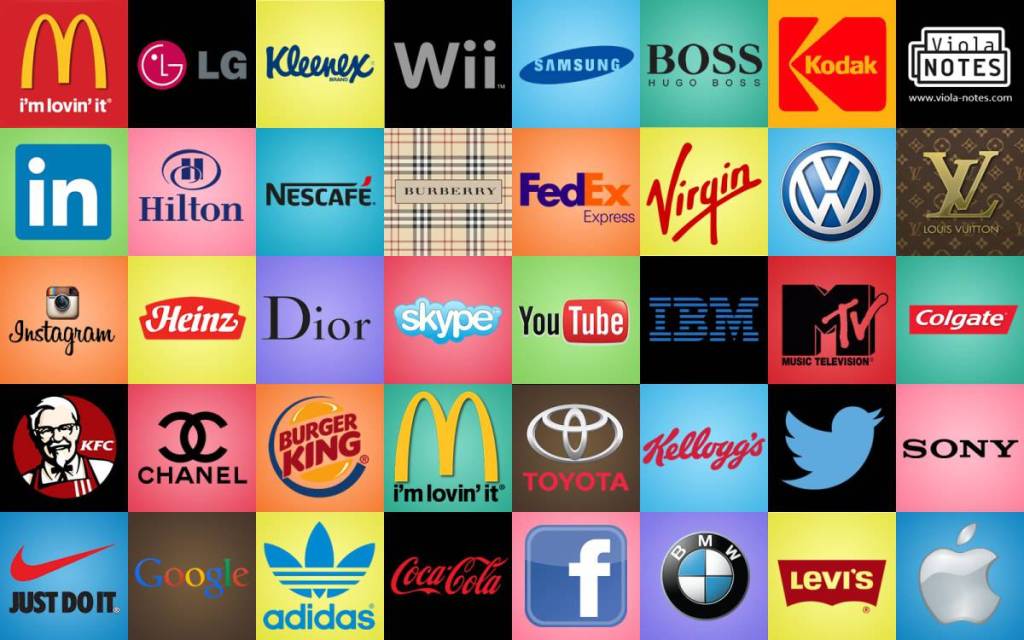
“When you go to work, you agree to exchange your labour in exchange for your pay packet, right? Actually, you may not realise it, but you are also selling your rights to free speech and to participate in democracy. Welcome to corporate cancel culture, a burgeoning phenomenon that is routinely ignored in debates about free speech. If you work for a large company, it will not allow you to say or do anything that harms its brand — at or outside work. If you transgress and attract controversy — whether for cracking a joke, a Facebook like, or a political post on TikTok, you can be shamed, sacked, and blacklisted.
“In the twenty-first century, major corporations have become the most powerful institution in the world — more powerful than many nations. That unchecked, anti-democratic power is reflected in the gaming of the political system, the weakening of governments, and the repressive control of the lives of employees. While their behaviour has deteriorated, corporations have invested heavily in ethically washed brands, claiming to be saving the planet and doing good. As Josh Bornstein argues, we would not tolerate a government that censored, controlled, and punished us in this way, so why do we meekly accept the growing authoritarianism of the companies that we work for?”—Scribe Publications | Josh Bornstein

Christian Parenti on Climate Change, Militarism, Neoliberalism And The State (Interview) | Truthout | Vincent Emanuele (12 May 2015)
The fossil fuel industry is the most powerful force the world has ever seen. Be honest, what institution could possibly stand up to them?
The state.That doesn’t mean it will. Right now, government is captured by these corporate entities. But, it has, at least in theory, an obligation to the people. And it also has the laws that we need to wipe out the fossil fuel industrial complex.
“This sounds fantastical and nuts, but I don’t think it is. I’ve been harping on this in articles and a little bit at the end of [my book] Tropic Of Chaos. According to the Center for Biological Diversity, Nixon-era laws can be used to sue developers, polluters, etc. You might not be able to stop them, but you can slow them down. The Clean Air Act basically says that if science can show that smoke-stack pollution is harmful to human health, it has to be regulated.
“If there was a movement really pushing the government, and making the argument that the only safe level of CO2 emissions is essentially zero … We have the laws in place. We have the enabling legislation to shut down the fossil fuel industry.
“We should use the government to levy astronomical fines on the fossil fuel companies for pollution. And we should impose them at such a level that it would undermine their ability to remain competitive and profitable.”–Christian Parenti
“Christian Parenti is an investigative fellow at the Nation Institute, an award-winning journalist and author. He currently teaches liberal studies at NYU and is a contributing editor at the Nation Magazine. He has reported extensively from Latin America, the Middle East, and Africa. His latest book is Tropic Of Chaos: Climate Change And The New Geography Of Violence.”–Truthout | Vincent Emanuele
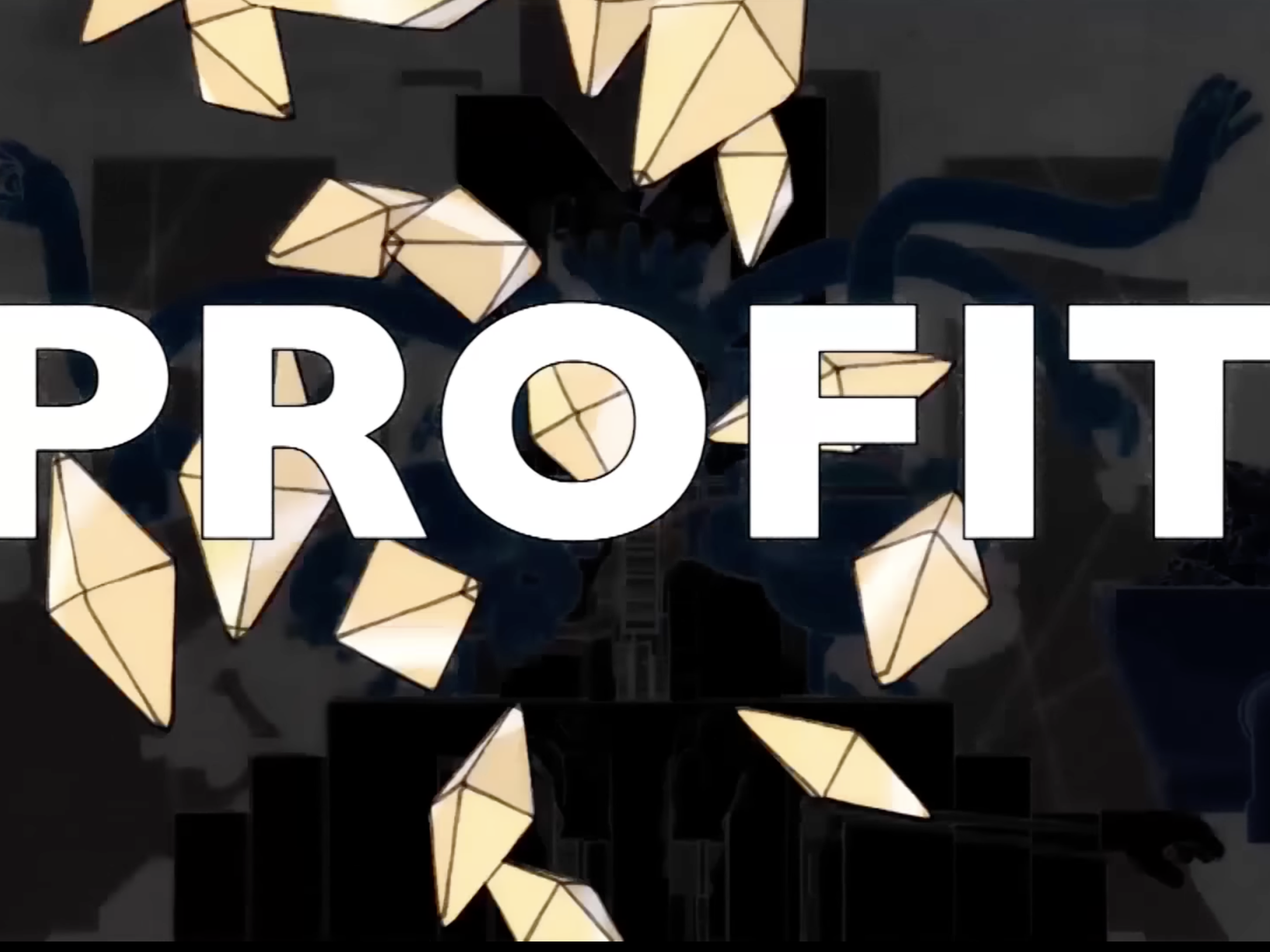
“The Five Filters Of The Mass Media Machine by Noam Chomsky. According to Chomsky, media operate through five filters: ownership, advertising, the media elite, flak and the common enemy.
1. Ownership
The first has to do with ownership. Mass media firms are big corporations. Often, they are part of even bigger conglomerates. Their end game? Profit. And so it’s in their interests to push for whatever guarantees that profit. Naturally, critical journalism must take second place to the needs and interests of the corporation.
2. Advertising
The second filter exposes the real role of advertising. Media costs a lot more than consumers will ever pay. So who fills the gap? Advertisers. And what are the advertisers paying for? Audiences. And so it isn’t so much that the media are selling you a product — their output. They are also selling advertisers a product — YOU.
3. The Media Elite
The establishment manages the media through the third filter. Journalism cannot be a check on power because the very system encourages complicity. Governments, corporations, big institutions know how to play the media game. They know how to influence the news narrative. They feed media scoops, official accounts, interviews with the ‘experts’. They make themselves crucial to the process of journalism. So, those in power and those who report on them are in bed with each other.
4. Flak
If you want to challenge power, you’ll be pushed to the margins. When the media – journalists, whistleblowers, sources – stray away from the consensus, they get ‘flak’. This is the fourth filter. When the story is inconvenient for the powers that be, you’ll see the flak machine in action discrediting sources, trashing stories and diverting the conversation.
5. The Common Enemy
To manufacture consent, you need an enemy — a target. That common enemy is the fifth filter. Communism. Terrorists. Immigrants. A common enemy, a bogeyman to fear, helps corral public opinion.”
George Monbiot: Neoliberalism, Nature And Negative Consequences | George Monbiot In Conversation With Polly Hemming | The Australia Institute Webinar Series (19 September 2024)
George Monbiot x How To Academy (April-May 2025)
“In his thought-provoking exploration, renowned thinker George Monbiot delves into the concealed ideology that shapes our daily lives. He reveals how a fringe philosophy from the 1930s was appropriated by wealthy elites to safeguard their fortunes and protect their power. This ideology has significantly influenced vital sectors such as education, healthcare, and our mental well-being. Monbiot underscores the profound impact this philosophy has on our relationships and the very planet we inhabit. Often unrecognized, this pervasive force feels like an inescapable part of our reality. Known as neoliberalism, it may seem omnipresent, but Monbiot contends that it is neither inevitable nor fixed. By illuminating its history and examining its repercussions, he empowers us to understand its origins and implications. Join us for this enlightening discussion to discover how comprehending neoliberalism can enable us to advocate for a more just and equitable future.”
The True Origin Of Capitalism | George Monbiot (Part 1) | How To Academy (April 2025)
We Are Ruled By Psychopaths | George Monbiot (Part 2) | How To Academy (April 2025)
What Is Neoliberalism? | George Monbiot (Part 3) | How To Academy (May 2025)

“George Monbiot, renowned journalist and author, in conversation with Director of the Australia Institute’s Climate and Energy program, Polly Hemming, on how incrementalism and neoliberal thinking is the cause, not the cure for, global ecosystem collapse.
“It is clear that Neoliberalism has failed Australians, and that privatisation of essential services has overwhelmingly benefitted shareholders not the public.
“Australian governments continue to promote economic pragmatism and markets as the only policy solution to protect and restore the environment despite its failure to fix our biggest problems elsewhere.”–The Australia Institute
“In 1995, Nelson Mandela presented him with a United Nations Global 500 Award for outstanding environmental achievement. He won the Sir Peter Kent award 1991 prize for his book Amazon Watershed. In November 2007, his book Heat was awarded the Premio Mazotti, an Italian book prize, but he was denied the money given with the prize because he chose not to travel to Venice to collect it in person, arguing that it was not a good enough reason to justify flying. In 2017, he was a recipient of the SEAL Environmental Journalism Award for his work at The Guardian.
“In 2022, Monbiot was awarded The Orwell Prize for Journalism.”–Wikipedia. Image: Screenshot from George Monbiot in conversation with Polly Hemming, Australia Institute
Fascist Passions Within The Frames Of War | Judith Butler | Maison des Sciences Humaines ULB (October 2024)
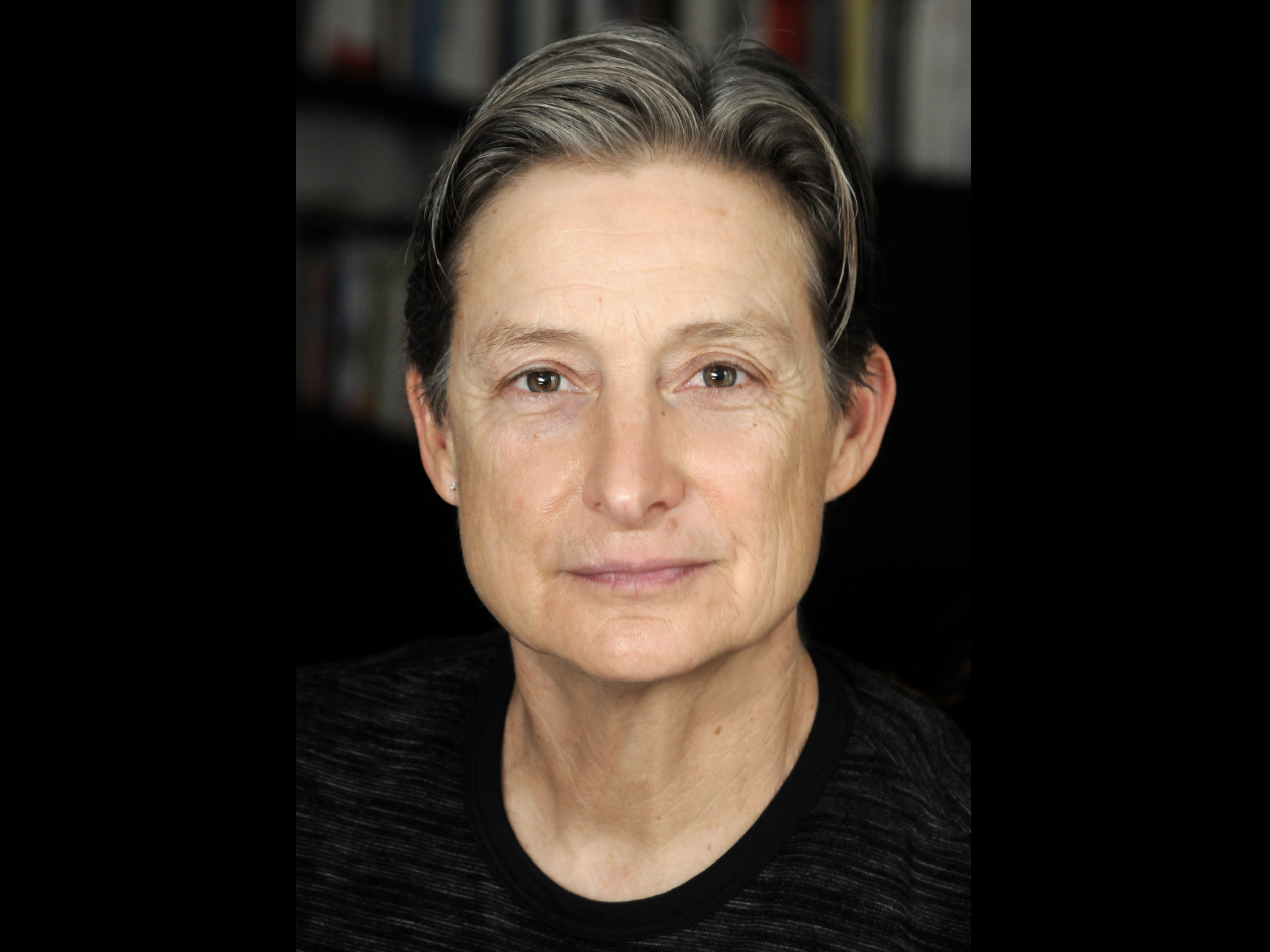
“Judith Pamela Butler (born February 24, 1956) is an American feminist philosopher and gender studies scholar whose work has influenced political philosophy, ethics, and the fields of third-wave feminism, queer theory, and literary theory.
“In 1993, Butler joined the faculty in the Department of Rhetoric at the University of California, Berkeley, where they became the Maxine Elliot Professor in the Department of Comparative Literature and the Program in Critical Theory in 1998. They also hold the Hannah Arendt Chair at the European Graduate School (EGS).
“Butler is best known for their books Gender Trouble: Feminism and the Subversion of Identity (1990) and Bodies That Matter: On the Discursive Limits of Sex (1993), in which they challenge conventional, heteronormative notions of gender and develop their theory of gender performativity. This theory has had a major influence on feminist and queer scholarship. Their work is often studied and debated in film studies courses emphasizing gender studies and performativity.”—Wikipedia. Image: Judith Butler in 2012, also from Wikipedia
 MUSIC. ART. LIFE.